
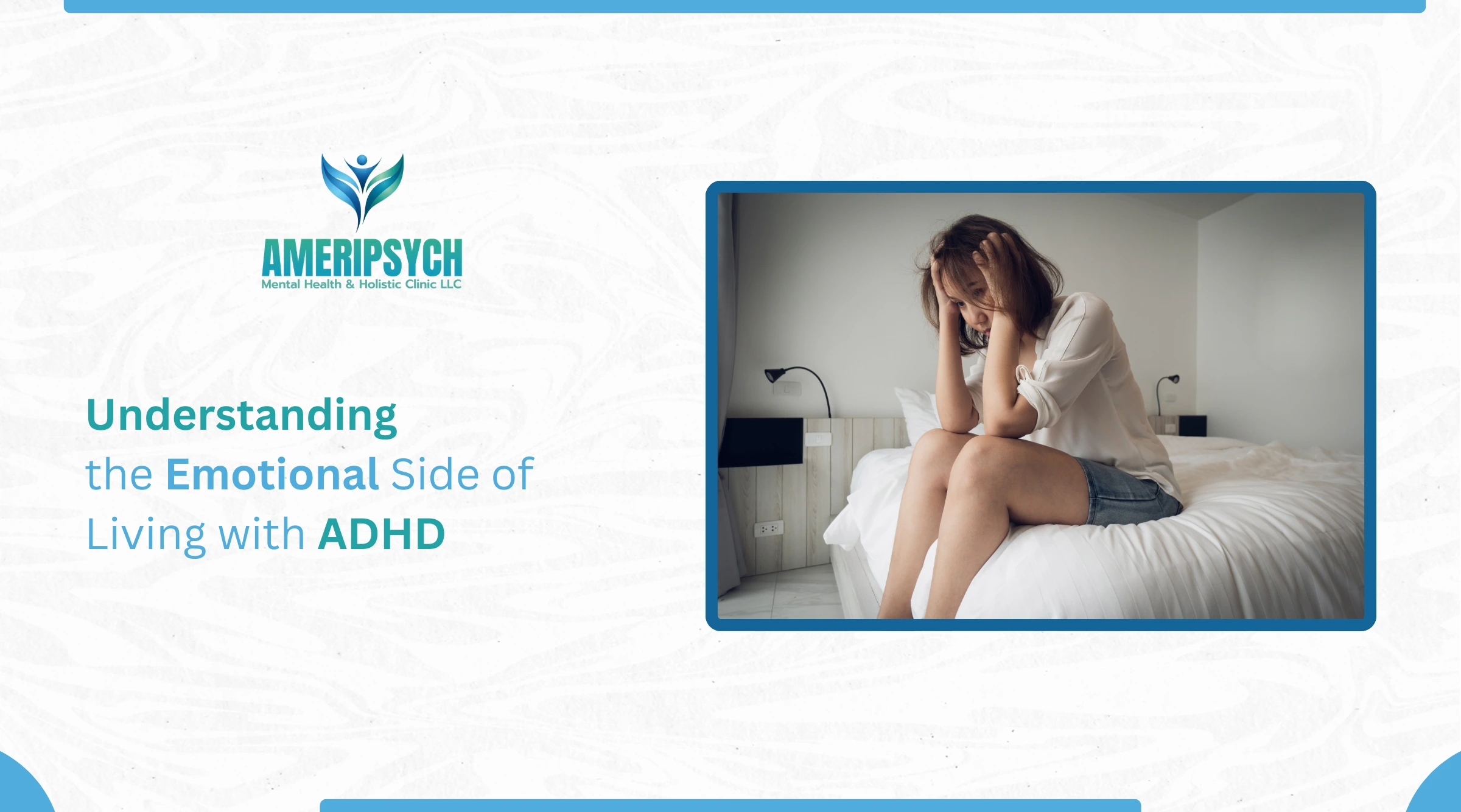
The majority of individuals consider ADHD a concentration problem. You forget things. You lose track of time. You begin ten things and get them all done.
However, there exists an emotional aspect of ADHD that hardly anyone can speak about, and, in fact, which, to many individuals, is the worst aspect of the condition to have.
The disappointment, the humiliation, the fatigue of struggling to match a differently functioning brain.
These feelings are actual, and they should be given due attention as much as the behavioral symptoms.
Why ADHD Is Also an Emotional Disorder
ADHD is a neurodevelopmental disorder.
It is not only a problem with attention and impulse control, but also with emotional regulation – the capacity to control the level of feelings and reaction to something.
Studies are converging towards a general deficiency of executive functioning as a symptom of ADHD.
Executive functions are categorized into:
- Working memory
- Cognitive flexibility
- Inhibitory control
- Emotional regulation
What this means in practice:
- Feelings are likely to be more extreme and difficult to tone down.
- Disillusionment and exhilaration come fast and hard.
- Minor disappointments are disproportionately uncomfortable.
- It may take more time to get emotionally back on track after a bad experience.
Emotional Experiences That Are the Most Prevalent in ADHD
Rejection Sensitive Dysphoria (RSD)
Rejection sensitive dysphoria, where people feel enormously emotional at the thought of criticism or actual criticism, rejection, or failure, is one of the most discussed emotional experiences in ADHD.
Even a slightly negative remark may be shattering.
People with RSD often:
- They should not be judged or evaluated.
- Strain so hard to make other people happy, lest they disapprove of you.
- Suffers mood swings after alleged insults.
- Difficulty in distinguishing constructive criticism and personal attack.
RSD is not a different diagnosis, but most clinicians understand the importance of RSD as a critical component of ADHD in both adults and adolescents.
Emotional Dysregulation
Other than RSD, emotional dysregulation, or the inability to adjust the severity of emotional reactions, is common in people with ADHD. This can look like:
- Sudden frustrations or anger.
- Easily cry than anticipated.
- Experiencing frustration when many people can handle situations.
- Swings in moods which appear quick or erratic.
One should understand that emotional dysregulation in ADHD is not equivalent to a mood disorder.
However, it may resemble it, which is one of the reasons why ADHD is not always correctly diagnosed – or why other diseases that may co-occur with it, such as anxiety or depression, are unidentified.
Low Self-Esteem and Chronic Shame
When several individuals are finally diagnosed with ADHD, particularly in adulthood, they have spent years of their lives thinking that there is something inherently wrong with them.
They have been told they are:
- Lazy
- Careless
- Inconsistent
- Not making use of their potential
The negative feedback accruing there adds up. Adults with ADHD are characterized by chronic shame and low self-efficacy (belief in one’s ability to succeed).
They are not mere sentiments, but they determine the way individuals go about tackling challenges, relationships, and opportunities.
The Way in Which Emotional Problems May Influence Everyday Life
The emotional aspect of ADHD does not remain within the feelings. It bleeds into:
- Relationships: Words spoken impulsively in a state of frustration, inability to be emotional, or withdrawal because of shame.
- Work performance: Not repeating the behavior of an earlier failure, or being too perfectionistic.
- Physical health: Chronic stress, insomnia, and the inability to establish a regular self-care schedule.
- Mental: High risk of major depressive disorder and anxiety disorders.
What Actually Helps
Evidence-Based Treatment Interventions
The positive aspect of this is that the emotional symptoms of ADHD can be successfully treated, particularly when the treatment is personalized.
- Not only will medication management help some individuals focus better but it can decrease the level of emotional reactivity at the same time.
- Psychotherapy, especially solution-focused and cognitive-behavioral therapies, can be used to find patterns and construct more efficient coping strategies.
- Motivational interviewing helps individuals to define their personal objectives and overcome ambivalence – particularly when they have been brought to avoidance by shame.
- Learning how ADHD actually works, neurologically, actually is a turning point, as self-blame is usually substituted by psychoeducation.
Developing Emotional Regulation Skills
During therapy, ADHD individuals will be able to work on:
- Identifying emotional triggers and preventing their growth.
- Learning to make a delay between the response and the stimulus.
- Enhancing self-empathizing and accurate self-assessment.
- Being able to express emotional needs in a relationship.
These are learnable skills. Any positive change is quite possible with the proper help.
You Do Not Have to Work Your Way Alone
Should anything in what you have read here sound like you, the humiliation, the emotional upheaval, the fatigue of struggling to put it all together, then know that whatever you are up to is not unknown, and it is incurable.
Blessing Dan-Dukor, PMHNP-BC, is a specialist at the AmeriPsych Mental Health and Holistic Clinic who provides caring, personalized care to adults with ADHD and its associated emotional challenges.
Care is not a checklist; it is a personalized approach to your complex life narrative and objectives that builds upon a combination of evidence-based medication management and psychotherapy, such as solution-focused therapy and motivational interviewing.
Virtual (telehealth) and in-person appointments are provided. Most insurance plans are accepted.
Make your appointment today and begin to create the clarity, balance, and confidence you deserve.
FAQs
Is medication useful in managing the affective symptoms of ADHD?
For many people, yes. Emotional reactivity can be decreased using stimulant and non-stimulant drugs.
An assessment can be done to identify the appropriate strategy to follow.
What is rejection-sensitive dysphoria?
RSD is a severe emotional reaction to what is perceived as criticism or rejection.
It is typical in ADHD and can considerably influence relationships and self-esteem but it is treated well when specific treatment is applied.